Mead · electric, gas and propane dryers
Mead dryer repair for propane houses and upstairs laundry
A Mead dryer is more likely than most to burn propane, sit on a second floor or exhale through a long run to a roof cap. Any one of those turns a small fault into a cold load. We repair all three setups.
- Propane ready
- LP orifices and pressure gauges carried on the van
- Both ends measured
- Exhaust read at the dryer and again at the cap
- Up US-2
- Fifteen minutes north, several runs a week
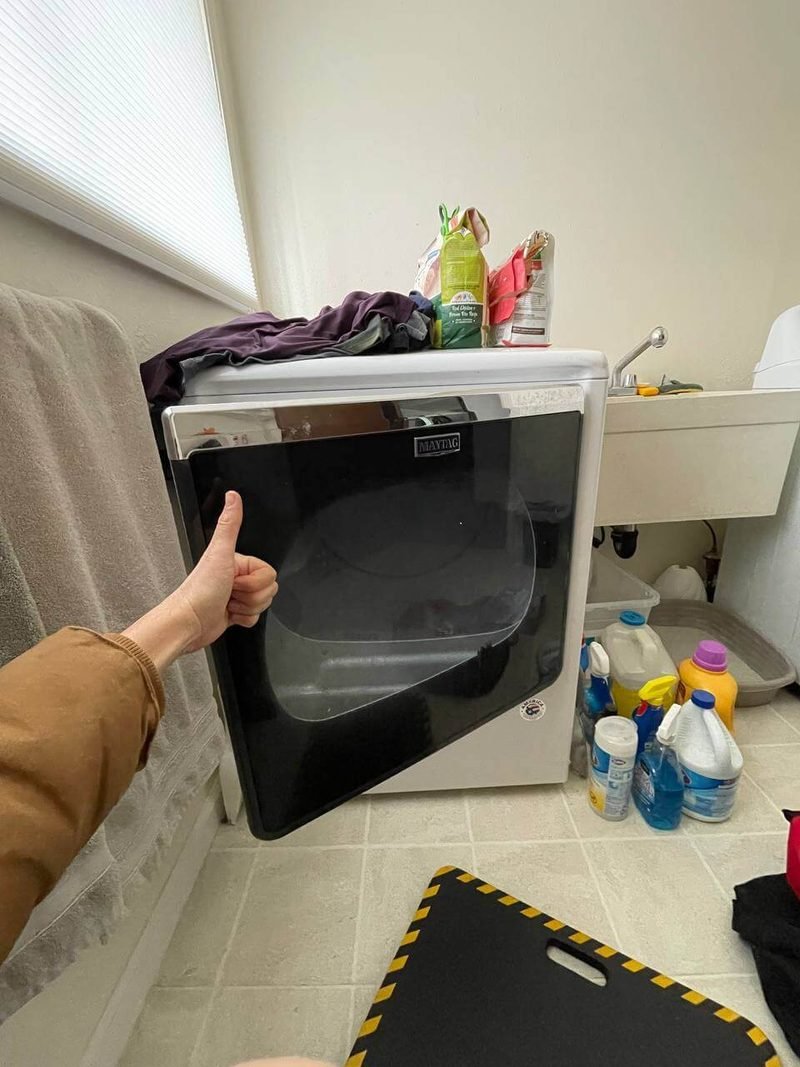
Two failures dominate Mead dryer calls. On propane units the igniter glows, the flame catches and then it drops out, usually a flame sensor or a valve coil, and in January sometimes low supply pressure from a tank running close to empty. On electric units the long vent is the culprit: exhaust temperature climbs, the thermal fuse opens, and in the worst cases the element overheats until its coil breaks. A new part inside a dryer that still cannot breathe lasts about six weeks, so every Mead visit measures exhaust at the machine and again at the cap. One clue helps us sort supply from appliance: if a propane furnace or range in the house also struggled that morning, mention it when you call.
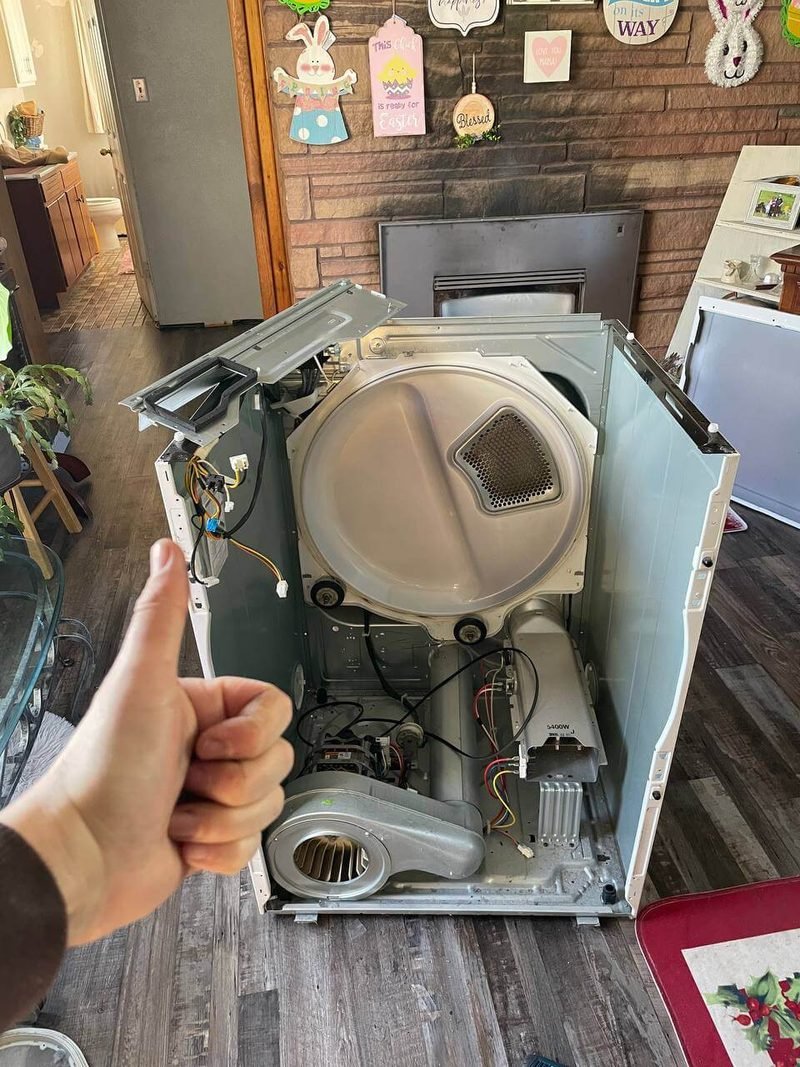
Propane adds one more check. A dryer shipped for natural gas must be converted with the right orifice before it burns LP properly; one that never was runs rich, soots its burner and eventually stops lighting. Our technician inspects the orifice on every propane unit and carries conversion parts, plus the elements, fuses, igniters, coils, belts, idlers and door switches that fail most on Whirlpool, Maytag, Kenmore, GE, Samsung and LG machines. Gas and propane visits end with a leak check, and the written repair price already includes the $99 diagnostic. Should you ever smell gas, leave the house and call 911 from outside before anything else.
Mead dryer symptoms by fuel and floor
| What you notice | What it usually is | What we do |
|---|---|---|
| Flame catches, then goes out | Flame sensor, valve coils, or low tank pressure in cold weather | Sensor or coils replaced, supply pressure checked at the regulator |
| Sooty burner, weak heat on propane | Unit never converted from natural gas | Correct LP orifice fitted, flame and pressure checked, leak test |
| Upstairs dryer needs two cycles | Long run to a roof cap or gable packed with lint | Run cleared end to end, airflow read at both ends |
| Electric unit runs cold | Thermal fuse or element cooked behind a restricted vent | Vent cleared first, then the part replaced |
| Breaker trips on a crowded panel | Scorched 240-volt receptacle, loose neutral, sometimes the element | Dryer and receptacle tested together, so you know which one failed |
| Thump or squeal with every turn | Worn rollers, a dry idler bearing or drum bearings | Drum pulled, worn hardware replaced, blower wheel cleaned |
Mead houses: acreage, older neighborhoods, long runs
Past Peone Prairie and up Mt. Spokane Park Drive, homes tend to be large, newer than 1990 and beyond the reach of the gas main. Their dryers burn propane from a yard tank or draw on a 240-volt circuit from a panel already feeding a well pump and a heat pump. The laundry is often upstairs or in a mudroom, with the exhaust climbing through the framing to a roof cap or crossing a long attic to a gable. Those are the longest runs on our north route, and they gather lint the fastest. Where a gable run crosses a cold attic and dips between trusses, lint and moisture settle in the low spot together, so we follow the duct as far as the attic lets us.
Around Farwell and Market Street the houses date from the 1970s through the 1990s and the dryers are often older, yet the vents still travel further than they should. The usual call there is a dryer that drifted from one cycle to two, with dryer-sheet film on the moisture sensor or a belt and rollers near retirement. The approach does not change: airflow first, then heat, then drive, then controls, so the quote covers what is actually broken and nothing else. Older machines here often have a worn felt seal at the drum edge as well; lint that slips past it gathers around the burner or element inside the cabinet, so we vacuum the cabinet out while the panels are off.
Mead is about fifteen minutes up US-2 from our shop, and we pair it with Colbert and Deer Park, so windows open several days a week with no distance surcharge. A scorched dryer receptacle or a breaker that trips under load is checked by the same technician on the same visit, so you know whether the fault is in the dryer or in the house wiring. If your panel also runs a well pump and a heat pump, say so when you book; it helps the technician plan the electrical checks.
Mead dryer repair, starting prices
On propane and natural gas units, an igniter or valve coil repair starts at $150. An electric heating element begins at $175, and clearing a long roof or gable vent starts from $100. These starting prices come from Spokane-area work and are there to help you plan; they are not a quote. Our technician writes your exact figure after the diagnostic, the $99 is part of that figure, and an ordered part brings no second trip fee. Payment is by card, cash or check when the work is finished, and the written warranty is in your hand before the van heads back down US-2.
| Repair | Price |
|---|---|
| Gas dryer igniter or valve coils | from $150 |
| Electric dryer heating element | from $175 |
| Dryer vent cleaning | from $100 |
| Dryer thermal fuse or thermostat | from $125 |
| Dryer belt, rollers and idler | from $175 |
| Dryer control board | from $250 |
Starting prices in the Spokane area for 2026, part and work included. Not a quote: your exact price is in the written estimate after the $99 diagnostic.
Questions we hear
Do you repair propane dryers in Mead?
Regularly; propane is the norm on Mead acreage. The burner works like a natural-gas one, with the same igniter and coils, but it needs the LP orifice and the right supply pressure at the regulator. Our most common propane complaint, a flame that catches and then dies, is a routine repair, and each propane visit closes with a leak check.
Loads take two cycles. Is it the dryer or the vent?
More often the vent, given how far the air travels in Mead's larger homes. A roof cap clogged with lint or a flap held down by ice is common. We take an airflow reading at the dryer and at the cap, clear the run, and only after that judge whether the sensor or element needs attention as well.
Is there extra charge for Peone Prairie or Mt. Spokane Park Drive?
No. All of Mead, from the Farwell and Market Street neighborhoods to the acreage up Mt. Spokane Park Drive, is on the same price card as Spokane with no distance surcharge. Mead shares a route with Colbert and Deer Park, so windows come up several days a week.
Should I stop using a squeaking dryer until you arrive?
Finish the load, then book. A squeak at this stage is usually rollers or the idler pulley, a small repair. Left alone it moves on to the drum bearings, then a shake, and eventually a belt that lets go. Tell us whether it is a high squeal or a low thump; they point at different parts.
What if the dryer outlet is the problem?
Then we tell you so. The technician who opens the dryer also checks the 240-volt receptacle, the neutral and the breaker, so you know whether the fault is in the dryer or in the house wiring before anything is replaced.
Call, text or book
Propane, natural gas or electric: tell us which when you call, text or book. A repair reserved through the site comes with up to $22 off, the $99 diagnostic is already inside the written price, and Mead sees our north-route van several days a week.
Book a visit
Tell us what is going on
We call or text back to confirm a time window, usually the same day.
- $99 diagnostic Counted inside the written repair price you approve. Say no to the repair and it is the whole bill.
- Up to $50 off An HVAC repair booked online. Appliance repairs booked online: up to $22 off. Never taken off the diagnostic.
- Up to $500 off A full-system install booked through our site-visit form, first-year tune-up included. The site visit costs nothing.
Prefer to text? Send a photo of the model tag to (509) 370-5361.