Deer Park · electric, gas and propane dryers
Deer Park dryer repair for the coldest vents on our map
Three cycles to dry one load, a damper locked in ice behind a drift, a basement machine that smells hot by the end of the run. Deer Park winters are harder on dryers than Spokane's, and we diagnose with that in mind.
- US-395 route
- North two or three days a week, more in winter
- Fuel checked
- Orifice and pressure verified on propane conversions
- Shop feeds
- Long subpanel runs tested for voltage drop
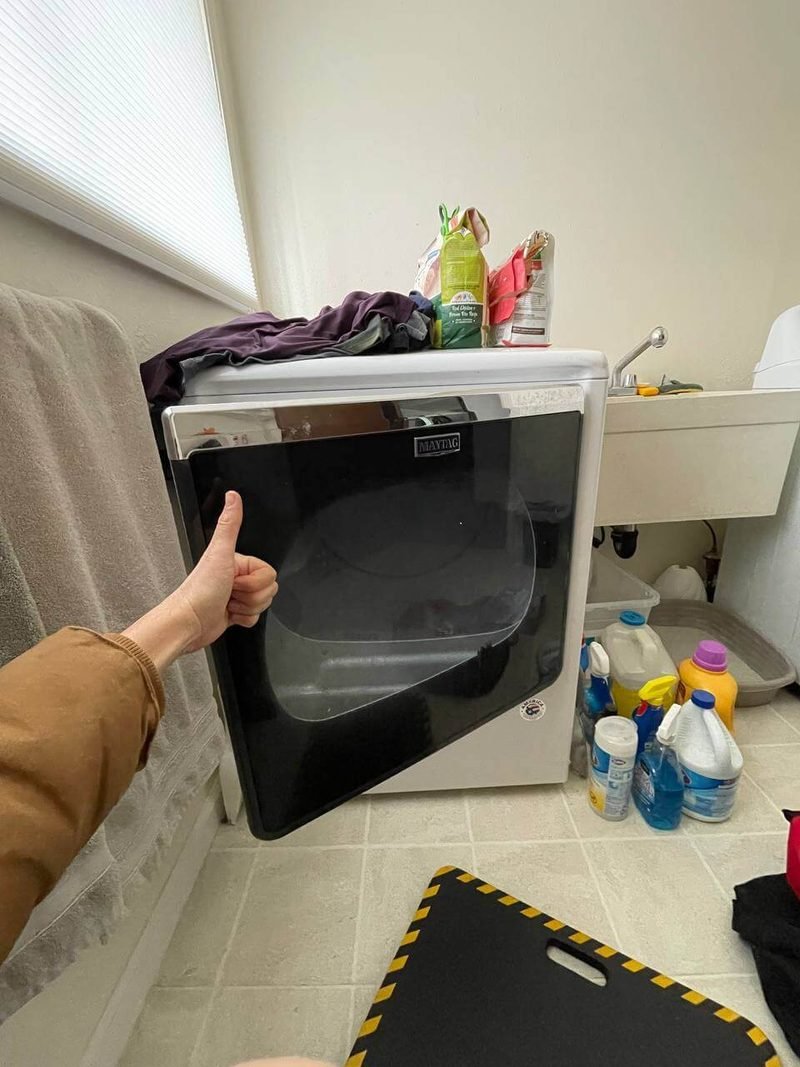
Deer Park sits in a cold pocket. Winter mornings here often read several degrees below the Spokane airport, and the acreage toward Clayton and Williams Valley runs colder still. A vent that leaves the house low on a north wall spends January under a drift; its damper ices to the frame and the dryer cooks itself pushing against it. In town, off Main Street and Crawford Street, the version is quieter: a basement dryer with twenty-five feet of duct to the rim joist, lined with lint that dry winter air has pressed into felt. Either way, clearing a drift away from the hood after a storm is a safe job for the homeowner and buys the dryer a lot of breathing room.
Both setups end in the same two complaints, a dryer that takes forever or one that quit heating, and both get the same diagnosis. Airflow comes first, with the vent inspected at each end, because an iced or packed vent skews every other reading. Then the heat source: element resistance and fuse continuity on electric units; igniter, flame sensor and coils on gas and propane, with gas pressure and a leak check. Then belt, rollers, idler and motor with the front panel off, and finally switches and board. One written price follows, the $99 inside it; approve it and most repairs finish on the spot. After a cold snap the calls pile up, so a careful description of the symptom when you phone helps us load the likely parts for the first trip.
Deer Park dryer symptoms and causes
| What you notice | What it usually is | What we do |
|---|---|---|
| Three cycles per load | Damper iced shut or a lint-choked run; weak element or sensor | Run cleared, damper checked, sensor or element replaced |
| Propane flame lights, then quits | Flame sensor, igniter or coils, or the tank regulator | Faulty part replaced, LP pressure read, leak test run |
| Weak, sooty flame | Dryer set up for the wrong fuel | Conversion kit fitted, orifice and pressure corrected |
| Shop dryer heats weakly | Voltage drop on a long feed from a subpanel or a cord | Feed measured under load before any part is condemned |
| Loud thump or squeal | Rollers, idler or glides worn through on a decades-old machine | Rollers, idler and glides replaced together |
| Hot smell drifting up from the basement | Lint around the heater or packed along the run | Moved up the schedule: run cleared end to end, airflow verified |
Gas mains, propane tanks and detached shops
Fuel is the big Deer Park difference. Natural gas reaches many streets in town, so dryers there are gas or electric like anywhere else. Past the end of the main, a dryer is electric or it burns propane, and that is where trouble hides. A propane dryer still set up for natural gas, or a natural-gas unit someone tied to a propane line, burns wrong: sooty, weak and unsafe. We carry conversion kits, check the orifice and measure pressure at the appliance. A propane unit that lights but drops out only on the coldest mornings may simply be short on pressure from a tank running low, and we rule that out before replacing coils. If you ever smell gas, get everyone out and call 911 from outside, and Avista too if the house is on natural gas.
Many acreage properties keep a second laundry in a detached shop. An electric dryer at the end of a long run from a subpanel can lose enough voltage to look like a weak element when the element is fine, and a dryer fed by an extension cord is worse still, since the cord heats up and the element never sees full power. We measure the feed under load before condemning anything. The written quote covers the dryer and its cord, and spells out what the circuit and the receptacle need to be right.
The basement machines in town have often turned for thirty years on their original hardware, so drum rollers, idlers and glides are routine work here, alongside elements, fuses, igniters and coils. Whirlpool, Maytag, Kenmore, GE, Speed Queen, LG, Samsung and Frigidaire are all familiar. Our technicians hold the EPA 608 Universal card, so the spare refrigerator or chest unit beside the dryer can get a look on the same trip. When a dryer that old reaches the point where parts are scarce, the technician tells you at the diagnostic instead of chasing them. We run the north route up US-395 with Colbert and Mead two or three days a week, more in winter when no-heat calls stack up, so a dryer window is rarely far off.
Deer Park dryer repair starting prices
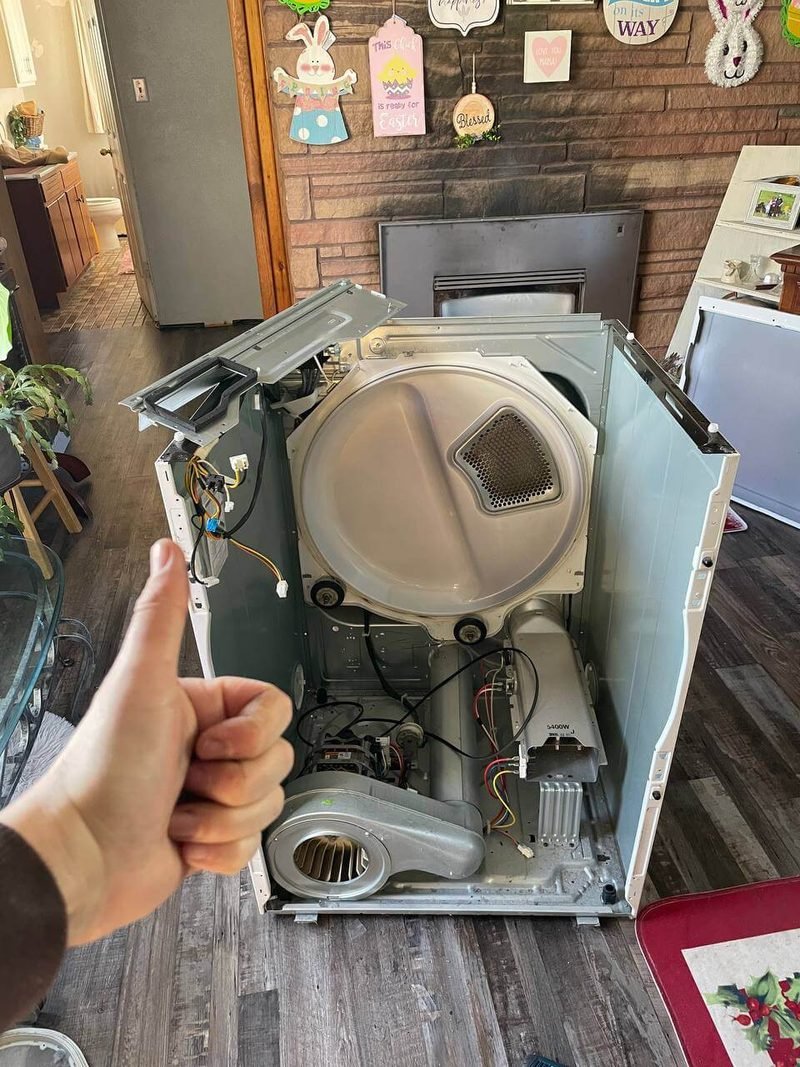
Gas and propane igniter or coil repairs in Deer Park start at $150, roller and idler work on an older drum from $175, and an electric element from $175. Those are representative Spokane-area starting prices, not a quote. The technician writes your actual price once testing is done, with the $99 already inside it, and a part on order does not bring a second trip fee for the drive back up 395. A conversion kit, where one is needed, appears on that written estimate as its own line.
| Repair | Price |
|---|---|
| Gas dryer igniter or valve coils | from $150 |
| Dryer belt, rollers and idler | from $175 |
| Electric dryer heating element | from $175 |
| Dryer vent cleaning | from $100 |
| Dryer thermal fuse or thermostat | from $125 |
| Dryer control board | from $250 |
Starting prices in the Spokane area for 2026, part and work included. Not a quote: your exact price is in the written estimate after the $99 diagnostic.
Questions we hear
My Deer Park dryer runs but nothing gets dry. Vent or dryer?
Frequently both. An iced or lint-packed vent makes the dryer run hot until the fuse or element gives out, so a part swapped without clearing the vent fails again. Airflow is the first thing we test, and the run is cleared before any new part goes in.
Can you convert a dryer from natural gas to propane?
Yes. We fit the manufacturer's conversion kit with the correct orifice and regulator setting, then check the pressure and run a leak test. A dryer that has been burning the wrong fuel usually gives itself away through a lazy yellow flame and soot, and we put it right during the same visit.
Our dryer is in a detached shop on a long extension cord. Is that a problem?
Yes, a real one. A 240-volt dryer needs its own properly sized circuit; a long, undersized cord drops voltage, runs warm itself and overheats the element. We test the feed, repair the dryer, and put in writing what the circuit needs so it can be set up correctly.
Is a no-heat dryer worth fixing?
Most of the time. Elements, fuses, igniters and coils are stocked, predictable parts, and the rest of the dryer is usually healthy. The written number arrives before any work, with the $99 diagnostic already in it; if the dryer is truly finished, the technician says so and the $99 is the only charge.
How often are you in Deer Park?
Our north-route van is in Deer Park two or three days a week alongside Colbert and Mead, and more often once winter no-heat calls pile up. Most dryer windows open within a day or two. A burnt smell changes the order: shut the dryer off at its breaker and say so when you call.
Call, text or book
House or shop, propane or electric: give us both details by phone or text, or through the online booking, which lowers the repair by up to $22. Deer Park is a regular stop on the US-395 run, and the $99 diagnostic is counted in the written price rather than added to it.
Book a visit
Tell us what is going on
We call or text back to confirm a time window, usually the same day.
- $99 diagnostic Counted inside the written repair price you approve. Say no to the repair and it is the whole bill.
- Up to $50 off An HVAC repair booked online. Appliance repairs booked online: up to $22 off. Never taken off the diagnostic.
- Up to $500 off A full-system install booked through our site-visit form, first-year tune-up included. The site visit costs nothing.
Prefer to text? Send a photo of the model tag to (509) 370-5361.