Furnace repair · Spokane, from West Columbia Ave
Spokane furnace repair, minutes from our own shop
Gas furnaces in craftsman basements, electric furnaces in older rentals, condensing units on Five Mile. We drive from West Columbia Avenue, find the failed step with a meter, and write one price before any part comes out.
- Shop distance
- Our vans start on West Columbia Ave, a short run anywhere in town.
- Most common fault
- A cracked hot-surface igniter: three clicks, no flame, a 58°F morning.
- Fuel mix
- Natural gas in most basements; electric furnaces in many older rentals.
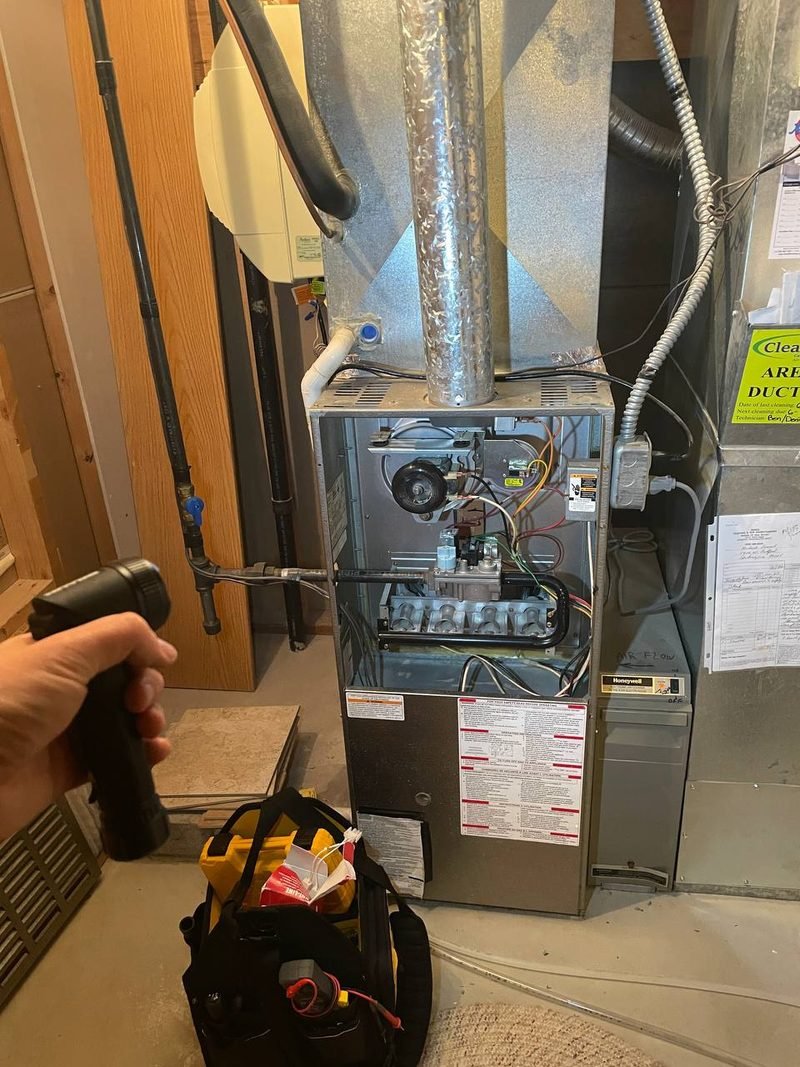
The furnace call we take most often in Spokane starts before sunrise. The thermostat asks for heat, the inducer spins up, the furnace clicks, and nothing lights; by the time anyone is awake the house has slid to 58°F. Nine times in ten that is a hot-surface igniter, a brittle ceramic part that glows orange a few thousand times a season until one morning it cracks and the sequence stops. Our shop sits on West Columbia Avenue, on the north bank between Kendall Yards and the Monroe corridor, so a no-heat call from Hillyard, the South Hill or Latah Valley is a short drive for us rather than a day trip.
We work on gas and electric furnaces in every part of the city, Monday through Saturday, with same-day windows whenever the house has no heat. The technician arrives with a meter, a manometer and a combustion analyzer, proves which part failed, and hands you one written number that already includes the $99 diagnostic. Approve it and the repair usually happens from van stock on that visit. Turn it down and the diagnostic is all you owe, with the written findings in your hand. Every gas furnace gets a flue reading too, because a furnace that lights can still be burning badly.
Spokane furnace symptoms and what they usually mean
| What you notice | What it usually is | What we do |
|---|---|---|
| Three clicks at dawn, inducer running, no flame | Cracked hot-surface igniter, or a gas valve that never opens | Igniter resistance measured and part replaced; valve voltage checked |
| Burners catch, then go out after about four seconds | Flame sensor glazed with oxide, often from lint-laden basement air | Sensor cleaned or swapped; microamp signal confirmed afterward |
| Condensing furnace on Five Mile quits on a single-digit night | Condensate trap iced where the line passes an unheated wall | Line thawed, then rerouted or insulated so the next cold snap passes |
| Furnace starts and stops every few minutes | Filter unchanged since spring, or a high-limit switch tripping | Filter replaced, limit tested, airflow and duct sizing explained |
| Thermostat calls, blower stays silent | Blower motor, run capacitor or control board | Capacitor and motor metered first; board replaced only when proven |
| Electric furnace in a rental blows lukewarm air | Open heating element or a sequencer not staging in | Elements and sequencers metered; circuit checked on the same visit |
Craftsman basements, North Side ranches and Five Mile condensing furnaces
Spokane’s furnaces live wherever the houses were built to put them. In West Central and Emerson-Garfield near our shop, in the Garland District and around Corbin Park, the usual setup is a 1990s or 2000s 80-percent furnace sitting in a 1915 basement and taking its combustion air from the same room as the washer and dryer. That shared air carries lint and dust into the burner compartment, and it is a large part of why flame sensors in these basements coat over sooner than the manual suggests. Hillyard and Logan have the same arrangement in smaller houses, with steeper stairs and lower ceilings for the technician to work around.
Up on the North Side, the mid-century ranches of Shadle and Lincoln Heights keep the furnace in a utility closet and still run the original ductwork, so airflow trouble shows up as limit-switch trips and short cycling. On the newer edges of town the story changes. Condensing furnaces in the Five Mile homes drain water through a line that can pass an unheated wall, and on a cold night the trap ices, the pressure switch stays open and the house goes cold. Indian Trail has its share of dual-fuel systems, where a heat pump does the mild-weather work and the furnace takes over below a set temperature; our technicians hold EPA 608 Universal certification, so one visit sorts out which half failed.
Electric furnaces turn up in the older rentals and in houses that never had a gas line. They fail on sequencers, elements and relays, and now and then on the 60-amp circuit feeding them. We test the breaker and the wiring on the same visit and tell you plainly when the fault is in the circuit rather than the furnace. If you ever smell gas instead of a cold house, leave first and call Avista or 911 from outside.
What Spokane furnace repairs typically cost
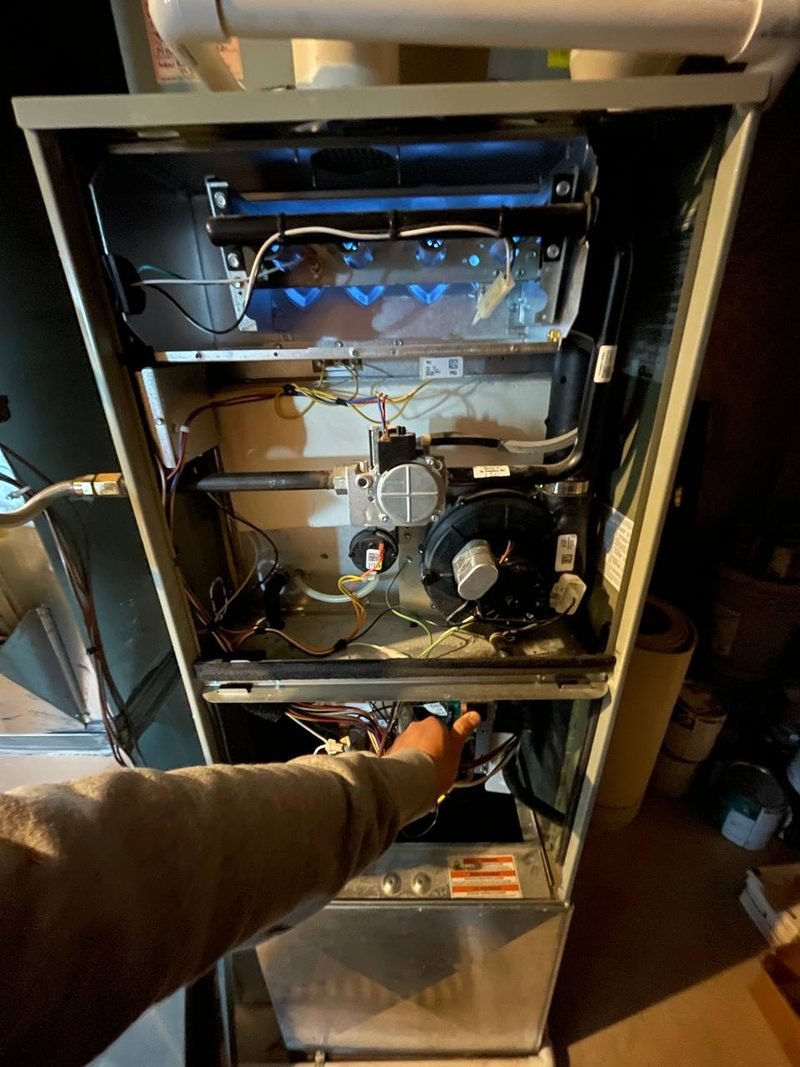
Most Spokane no-heat calls end in one of three repairs. A replacement igniter starts at $175, a flame sensor cleaned or replaced from $100, and a frozen condensate line thawed, rerouted or heat-traced from $150. Read those as where a Spokane-area job starts, not as a quote: the number you actually approve is written down after the diagnostic, with the $99 already counted inside it. Book online and up to $50 comes off the repair itself, while the diagnostic price stays where it is.
| Repair | Price |
|---|---|
| Furnace igniter | from $175 |
| Flame sensor cleaning or replacement | from $100 |
| Frozen condensate line thawed, rerouted or heat-traced | from $150 |
| Inducer motor | from $450 |
| Pressure switch | from $175 |
| Limit switch | from $150 |
| Furnace or air handler control board | from $350 |
| Gas valve | from $350 |
Starting prices in the Spokane area for 2026, part and work included. Not a quote: your exact price is in the written estimate after the $99 diagnostic.
Questions we hear
The house is cold this morning. How fast can you reach a Spokane address?
Our vans leave from West Columbia Avenue, so most of the city is a short drive, from Latah Valley out to Hillyard. No-heat calls get same-day windows Monday through Saturday, and an early call usually puts a technician at your door that afternoon. If the schedule is full we tell you on the phone. Meanwhile, check that the filter is not clogged and the furnace door is closed so its switch is pressed.
Our furnace shares the basement with the washer and dryer. Does that cause problems?
It can. A furnace pulls combustion air from the room around it, and in many older Spokane basements that room also holds the laundry. Lint and dust ride that air into the burners and film the flame sensor, which is why those furnaces light and then shut down a few seconds later. We clean or replace the sensor and look over the burners while the panel is off.
Why does our high-efficiency furnace on Five Mile stop on the coldest nights?
A condensing furnace makes water, and the drain line has to carry it somewhere. When the trap or line runs past an unheated wall or out through the siding, it ices up on a single-digit night, the pressure switch stays open and the furnace refuses to fire. We thaw it, then change the route, insulate it or add heat trace so the call does not repeat.
Do you repair electric furnaces in older Spokane rentals?
Yes, element by element. We meter each heating element and sequencer, check the relays and blower, and test the breaker and the 60-amp circuit feeding the furnace. If the fault is in that wiring rather than the furnace, we tell you so plainly. Landlords receive the written quote and written warranty, and the tenant gets a texted arrival window.
How will I know a cracked heat exchanger is real and not a sales pitch?
You will see it. When the combustion readings or a visual check point at the exchanger, the technician runs a camera inside and shows you the image before using the word. Then you get two written numbers, one for repair and one for replacement, and the decision stays with you. A furnace with a sound exchanger and a dead igniter gets an igniter.
Call, text or book
Ring or text us with what the furnace is doing, or use the online booking form, which knocks up to $50 off the repair. The $99 diagnostic is folded into the written price you approve, and it is the entire bill if you decide not to go ahead.
Book a visit
Tell us what is going on
We call or text back to confirm a time window, usually the same day.
- $99 diagnostic Counted inside the written repair price you approve. Say no to the repair and it is the whole bill.
- Up to $50 off An HVAC repair booked online. Appliance repairs booked online: up to $22 off. Never taken off the diagnostic.
- Up to $500 off A full-system install booked through our site-visit form, first-year tune-up included. The site visit costs nothing.
Prefer to text? Send a photo of the model tag to (509) 370-5361.