Furnace repair · Otis Orchards acreage
Otis Orchards furnace repair for the furnace that hardly runs
Out here the furnace usually fires only when the heat pump and wood stove fall short. A few hundred hours a year means parts stiffen and crack rather than wear. We find the one that did and usually repair it on the first visit.
- Drive time
- About thirty minutes via Trent Avenue or the Barker exit.
- Heat mix
- Heat pump, wood stove, then a gas, propane or electric furnace.
- Rural power
- Surges on country lines can take out control boards.
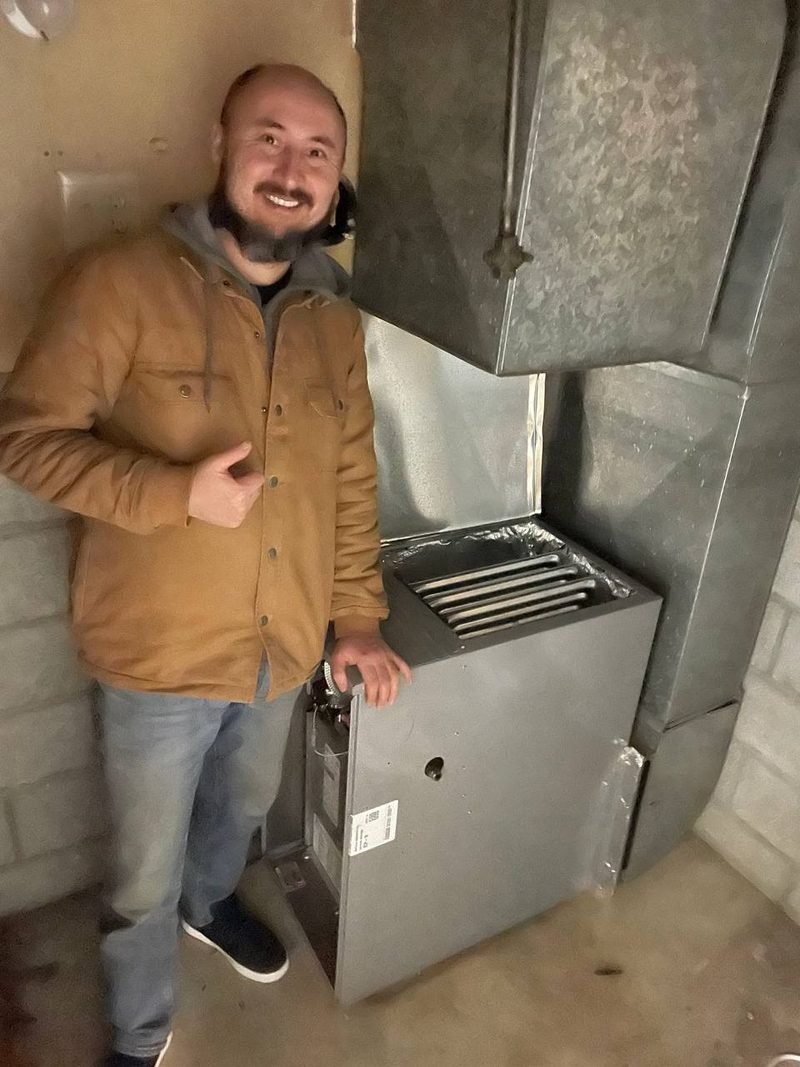
Along Campbell, Kenney and Harvard Roads, the furnace is seldom the only source of heat. A heat pump covers spring and fall, a wood stove covers winter evenings, and the furnace lights only when both fall behind. That arrangement changes the way it breaks. Running a few hundred hours a year rather than a few thousand, a furnace does not so much wear out as seize up: a flame sensor grows a film in a dusty utility room, an igniter that made it through twenty winters cracks on its first cold start of the season, and rubber hoses harden until one splits at the fitting.
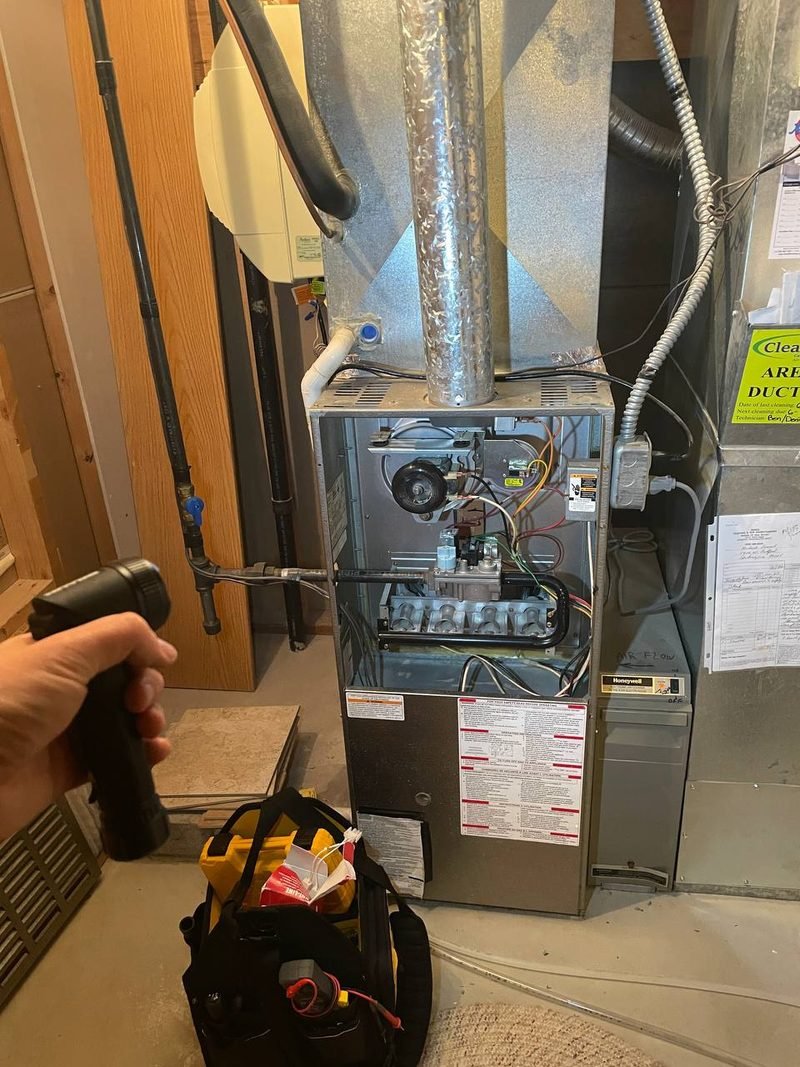
The first hard night in October is when those weaknesses show. We walk the furnace’s sequence with a meter, verify the board’s fault code instead of trusting it, and put a combustion analyzer in the flue of every gas and propane unit to read oxygen, carbon monoxide and temperature. Then one written price, with the $99 diagnostic part of the total rather than an extra line. No-heat calls get a same-day window from Monday to Saturday, and Saturday costs the same as Tuesday. When a part has to be ordered, the second visit adds no trip fee, and we explain how to lean on the heat pump and stove in the meantime.
Otis Orchards furnace symptoms on mixed systems
| What you notice | What it usually is | What we do |
|---|---|---|
| First October call: clicks, no flame | Igniter cracked after a long idle stretch, or a stuck gas valve | Igniter replaced; valve tested and ignition timing checked |
| Fires for forty seconds, quits, repeats | Split pressure-switch hose, coated flame sensor, or an iced drain | Hose or sensor replaced; switch and drain tested |
| Dead after a storm or power blip | Control board damaged by a surge on the rural line | Board metered and replaced only when confirmed bad |
| Heat pump and furnace run together | Changeover point or outdoor sensor set wrong | Dual-fuel controls set so one runs at a time |
| Propane flame yellow or sooting | Wrong orifices from an old conversion, or low tank pressure | Gas pressure set with a manometer, orifices confirmed, combustion read |
| 1985 electric furnace, high bill, weak heat | Open elements or a failing sequencer | Elements and sequencer metered and replaced; breaker checked |
Acreage furnaces between the Valley and the Idaho line
Otis Orchards homes date from the 1970s through the 2000s and sit on one to five acres, and most heat with a combination of sources. Gas lines reach the streets closer to Wellesley and Trent. Beyond them, it is propane from a tank beside the shop building, or an electric furnace that cost little to install around 1985 and has cost plenty to run in every winter since. Add the usual heat pump and wood stove and the furnace becomes the backup, and a backup that seldom runs is one nobody checks until the night it is needed.
That role is why the dual-fuel changeover deserves attention here. The thermostat or an outdoor sensor decides when the heat pump hands off to the furnace, and that setting decides much of your winter bill. If both run at once, or the furnace never gets called, the controls are wrong, and we check them during any furnace visit on a mixed system. Rural power is the other local factor: a surge on the line can take out a control board, so after storms we see boards that the meter confirms are dead, along with plenty that turn out to be fine once a fuse or transformer is replaced. Propane units add regulator and tank-pressure faults and old natural gas orifices left in place.
A house near the river called on a Saturday in November: the furnace fired, ran about forty seconds and quit, again and again, while the wood stove did what it could. The cause was a pressure-switch hose split at its fitting. The part was on the van and the visit took less than an hour. We cover Otis Orchards with the east end of the Valley and Newman Lake, and the crew carries EPA 608 Universal certification, which these mixed systems need. When a heat exchanger is cracked, you see it on camera and get repair and replacement figures in writing.
Otis Orchards furnace repair: starting figures
The usual repairs on Otis Orchards backup furnaces are a pressure switch or its hose, starting at $175; a control board after a surge, from $350; and an igniter after a long idle stretch, from $175. That is where those jobs commonly start around Spokane, not a quote. You see your own price in writing after the diagnostic, with the $99 included. Reserve through the website and up to $50 comes off the repair, though never off the diagnostic.
| Repair | Price |
|---|---|
| Pressure switch | from $175 |
| Furnace or air handler control board | from $350 |
| Furnace igniter | from $175 |
| Flame sensor cleaning or replacement | from $100 |
| Inducer motor | from $450 |
| Limit switch | from $150 |
| Gas valve | from $350 |
| Blower motor (standard PSC) | from $400 |
Starting prices in the Spokane area for 2026, part and work included. Not a quote: your exact price is in the written estimate after the $99 diagnostic.
Questions we hear
Should our heat pump and furnace run at the same time?
Normally not. On a typical dual-fuel setup here, the thermostat or an outdoor sensor chooses between the two by outdoor temperature, and where that switch point sits has a large effect on your heating bill. Both running at once, or a furnace that is never called at all, means the controls are set wrong. Any furnace diagnostic we do on a mixed system includes a look at that changeover.
Why would a furnace that barely runs break down?
Because idle parts age in their own way. Over a long summer a flame sensor collects a film, rubber hoses dry out, and an igniter can crack the first time it heats after months cold. Low run hours do not protect a furnace; they mean faults surface together on the first hard night. A tune-up before October catches many of them, starting from $129.
The furnace died after a storm. Is the board gone?
Possibly, but we prove it before replacing it. Surges on rural lines can damage a control board, yet a tripped breaker, a blown low-voltage fuse or a failed transformer can look identical. The technician meters each in turn. If the board is confirmed bad, the replacement is quoted in writing before it goes in.
Our propane furnace burns yellow. Is that the furnace or the gas supply?
Often the supply. Low tank pressure or a regulator fault starves the burners, and a furnace converted from natural gas years ago may still have the wrong orifices. We set gas pressure with a manometer, confirm the orifices and read the flue with a combustion analyzer, then leak-check each fitting. If you smell gas, get everyone out and call 911.
Can you reach Otis Orchards today if we have no heat?
Usually. We cover Otis Orchards with the east Valley and Newman Lake, about thirty minutes from the shop, and a morning call usually lands a same-day window, Saturday included at the same price. If none is open we tell you on the phone. Meanwhile, check the breaker and filter and keep the wood stove going.
Call, text or book
Call or text before the backup heat gives out, or reserve a window online for a repair price up to $50 lower. The $99 diagnostic is already inside the written price you approve.
Book a visit
Tell us what is going on
We call or text back to confirm a time window, usually the same day.
- $99 diagnostic Counted inside the written repair price you approve. Say no to the repair and it is the whole bill.
- Up to $50 off An HVAC repair booked online. Appliance repairs booked online: up to $22 off. Never taken off the diagnostic.
- Up to $500 off A full-system install booked through our site-visit form, first-year tune-up included. The site visit costs nothing.
Prefer to text? Send a photo of the model tag to (509) 370-5361.