Maintenance · Spokane Valley
HVAC maintenance in Spokane Valley, timed to frost and cottonwood
September, before frost settles on Dishman Hills. April, before cottonwood from the Centennial Trail reaches the condenser. Each visit uses a combustion analyzer, gauges and a camera, ends with a written report, and carries our No-Breakdown Guarantee.
- Tune-ups from $129
- Heat pumps and multi-zone mini-splits priced when you book.
- Coil actually cleaned
- Cottonwood and field dust washed out, not hosed over.
- Season covered
- If the tuned system fails that season, its tune-up price becomes repair credit.
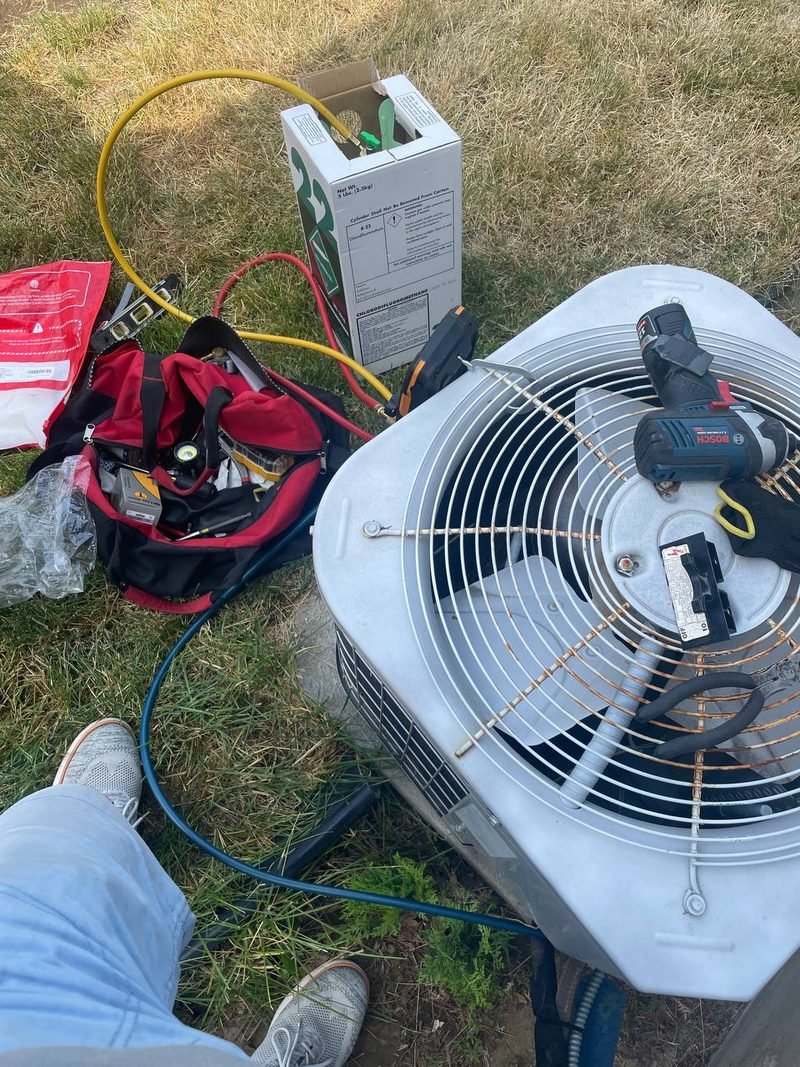
Valley equipment is often older than the house around it looks. South of Sprague, from Opportunity and Dishman to Chester and Ponderosa, ranches built between the 1960s and 1980s carry 1990s furnaces and first-generation heat pumps that went in quickly and still run on their original capacitors and contactors. The newer homes east of Sullivan have high-efficiency furnaces whose condensate traps and pressure switches clog before anything else on them does. Both kinds tend to fail quietly in October and loudly in December.
A tune-up exists to catch the quiet part. A flame sensor reading low in September is a furnace that locks out on the first cold night. A capacitor sliding below its rated value in April is an outdoor unit humming without starting on a 100°F July afternoon. A cracked igniter, a sticking pressure switch, or a hairline in a heat exchanger that only a camera reveals will not show up on the thermostat until the worst possible day. That is why our technicians measure each of those parts and write the numbers down instead of eyeballing them. It is also why we can put a guarantee behind the visit: the instruments find most of what is about to fail, and if one part slips past us, absorbing that miss is our job, not yours. Carrier, Lennox, Trane, Bryant, Rheem, Goodman, York and Amana systems all get the same sequence.
What Valley tune-ups catch, and what happens next
| What you notice | What it usually is | What we do |
|---|---|---|
| Greenacres heat pump iced over last winter | A defrost board that stopped calling defrost cycles | Forced defrost run and timed, reversing valve exercised, board tested |
| 1990s furnace still on its original parts | Capacitors and contactors worn by decades of cycling | Values measured and logged; replacement quoted only if out of range |
| Condensing furnace in a garage east of Sullivan | Condensate trap clogging, drain exposed to the cold | Trap cleared, drain route checked, pressure switch tested against a manometer |
| Condenser matted by late June | Cottonwood fluff and needles packed into the fins | Coil cleaned through, then pressures, superheat and subcooling read |
| Blower louder than it used to be | Dirty wheel or a run capacitor losing value | Blower amps and capacitor measured, wheel condition photographed |
| A reading comes back out of range | A part close to failing | One written repair number, and the choice stays with you |
Why Valley systems wear the way they do
The Valley floor throws things at outdoor units that no equipment brochure mentions. Cottonwood fluff drifts off the river in June, ponderosa needles drop all year on the hillside streets below Dishman Hills, and the fields around Barker Road send dust across the yards every August. A coil that was clean in May can resemble a felt blanket by September, and a blanketed coil makes the compressor run hotter through the hottest weeks. That fluff does not rinse off with a garden hose, so our spring visit includes a proper coil cleaning with the unit opened up.
Last fall a routine visit to a Greenacres heat pump turned up a defrost board that had quit calling defrost cycles. Nothing looked wrong yet. Left alone, the outdoor coil would have iced solid by February and the house would have leaned on its backup strips until spring, at resistance-heat prices. That is the kind of find that justifies coming out with instruments: a board tested on a mild October afternoon instead of a no-heat call in the middle of a cold snap.
Garages are the other Valley pattern. Many furnaces here sit in an attached garage, and a condensate line run along a cold wall can ice shut on the first deep-cold night, trip the pressure switch and stop the furnace cold. We trace that route during the fall visit and note it on the report with a photo. Refrigerant work found during a tune-up is handled on the spot by technicians with EPA 608 Universal cards. The Valley is roughly twenty minutes east of our shop on I-90, with no distance surcharge, and tune-ups run Monday through Saturday.
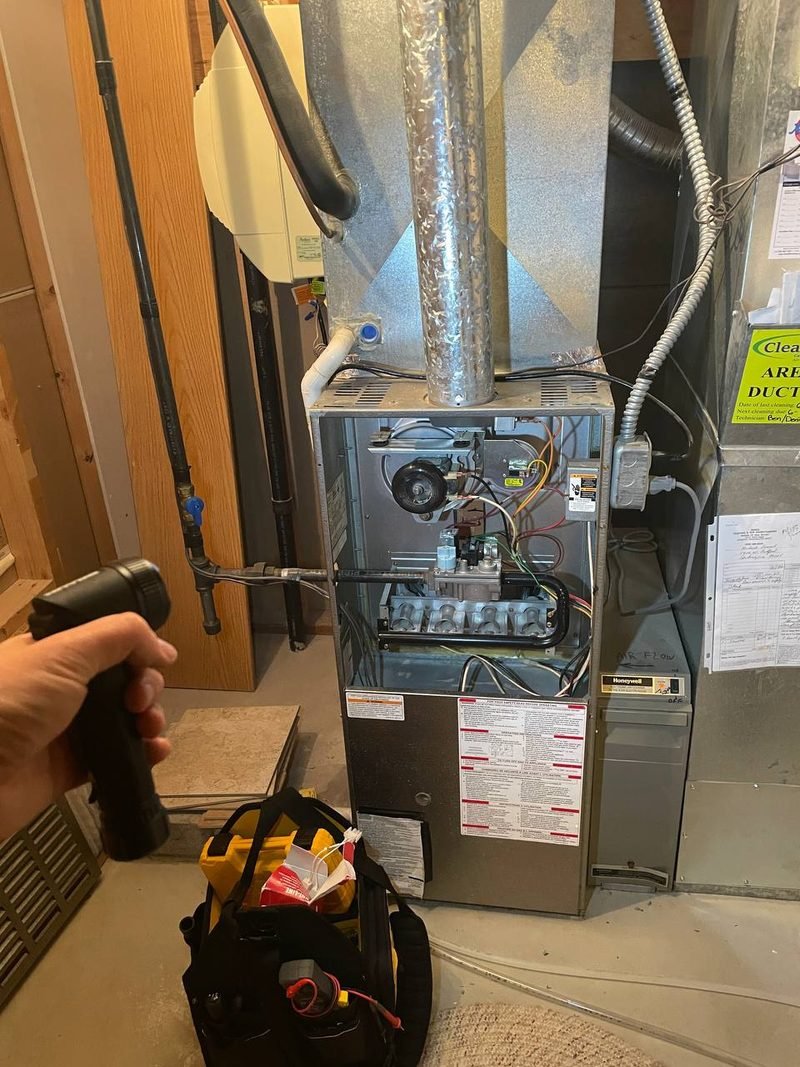
Tune-up pricing in Spokane Valley
Furnace and AC tune-ups in the Valley are from $129. Heat pumps get both the heating and cooling checks plus a forced defrost and are priced when you book, as are multi-zone mini-splits. When a reading falls out of range, the repair is quoted separately: replacing a defrost board on a heat pump starts at $250, a contactor at $175, and an igniter at $175. These starting prices reflect typical Spokane-area work, useful for budgeting but never a quote; your own repair number goes on paper before any repair begins. The No-Breakdown Guarantee says that a failure of the tuned system before the season ends means the tune-up price comes off the repair, and the annual plan bundles the spring and fall visits for less than booking each one separately.
| Repair | Price |
|---|---|
| Heat pump defrost board | from $250 |
| Contactor | from $175 |
| Furnace igniter | from $175 |
| HVAC tune-up | from $129 |
| Flame sensor cleaning or replacement | from $100 |
| AC / heat pump capacitor | from $150 |
| Frozen condensate line thawed, rerouted or heat-traced | from $150 |
| Thermostat replacement | from $150 |
Starting prices in the Spokane area for 2026, part and work included. Not a quote: your exact price is in the written estimate after the $99 diagnostic.
Questions we hear
Our Valley ranch has a 25-year-old heat pump. Should we still have it tuned?
Usually, yes. A system that age tends to fail on a capacitor, contactor or defrost board long before the compressor gives out, and those are exactly what the visit measures. The readings also tell us roughly how many seasons are left. When the numbers point to replacement as the wiser spend, you hear that in writing, without a separate sales visit.
What makes your tune-up different from a filter change?
Instruments. A combustion analyzer, a manometer, refrigerant gauges, a clamp meter and a camera measure the parts that fail instead of glancing at them. A filter swap and a checklist cannot see a flame sensor reading low or a capacitor at 80 percent of its rating, and those two faults cause a large share of the emergency calls we run.
What counts as a breakdown under the No-Breakdown Guarantee?
If the furnace, air conditioner or heat pump we tuned stops heating or cooling during the season that follows and needs a repair, you get the tune-up price back as credit on that repair. It applies to the same system for the same season, and the credit comes straight off the written repair number you approve.
How often does the outdoor coil need cleaning in the Valley?
At least once a year at the spring tune-up. On properties near the river or the cottonwoods along the Centennial Trail it may need a second look by late summer, and we photograph the coil at each visit so you can see how fast it loads up. Between visits, keep yard debris and snow clear of the unit.
Will the technician try to sell me repairs?
No. We report what the instruments found, with readings and photos, and if something needs attention you get one written number to think over. Most Valley tune-ups end with nothing to sell. The ones that do usually involve a part that would otherwise have become a December no-heat call.
Call, text or book
Book a Valley tune-up online, or call or text to pick a window; tune-ups are from $129 and come with the No-Breakdown Guarantee. Already without heat or cooling? The $99 diagnostic counts toward the written repair figure, with up to $50 off an HVAC repair booked online.
Book a visit
Tell us what is going on
We call or text back to confirm a time window, usually the same day.
- $99 diagnostic Counted inside the written repair price you approve. Say no to the repair and it is the whole bill.
- Up to $50 off An HVAC repair booked online. Appliance repairs booked online: up to $22 off. Never taken off the diagnostic.
- Up to $500 off A full-system install booked through our site-visit form, first-year tune-up included. The site visit costs nothing.
Prefer to text? Send a photo of the model tag to (509) 370-5361.