Spokane Valley · first-generation heat pumps
Fixing Spokane Valley’s first-generation heat pumps and AC
Veradale, Greenacres and Opportunity filled with heat pumps in the 1980s and 90s, and many still run. When one short-cycles in July or ices over in February, we measure before we quote and keep same-day windows open six days a week.
- Van nearby
- Most days one of our vans is already working between Argonne and Barker.
- Short-cycle diagnosis
- We pin down which of four causes is behind the on-off pattern.
- Coil cleaned
- Cottonwood and pine needles come out of the condenser on every cooling call.
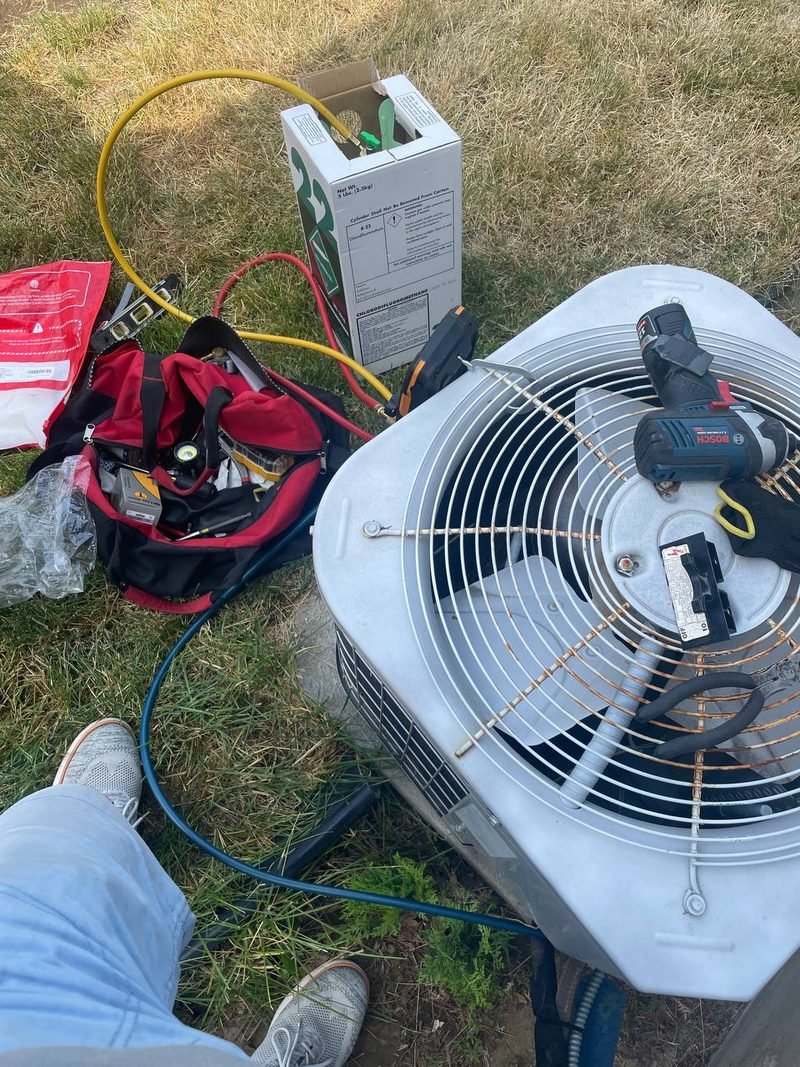
The Valley took to heat pumps early. As ranches went up south of Sprague around University and Pines, and out through Veradale and Greenacres, many were fitted with a heat pump on the existing furnace, sized by square footage and set in place in a hurry. A surprising number of those first-generation systems are still working decades later, some on their third capacitor and still holding an R-22 charge. July is when they show their age, and the symptom we hear about most is a unit that starts, runs a few minutes, shuts off and starts again, all afternoon long. Homeowners tend to read that as a dying compressor. More often it is a switch protecting the compressor from something else, and that something else is usually cheaper to fix.
Short cycling has several causes and one price for each, so guessing would cost you money. Gauges on both service ports tell us whether the charge is right, low from a leak, or held back by a restriction. A clamp meter on the compressor and fan shows whether the capacitor has drifted out of tolerance or the compressor is pulling locked-rotor amps. The contactor is inspected for pitting, and on a heat pump the reversing valve and defrost board go through a forced cycle. The written number comes from those readings, with the $99 diagnostic built in. When the cause is a part, most Valley repairs finish on the same visit from van stock; when the cause is the size of the unit, that goes on paper too, so you are not paying to chase a problem no part can solve.
Valley symptoms we see every season
| What you notice | What it usually is | What we do |
|---|---|---|
| Unit runs three minutes, stops, restarts | Condenser matted with cottonwood, tripping the high-pressure switch | Coil cleaned through, head pressure rechecked under load |
| Short cycling with frost on the suction line | Charge low from a leak, tripping the low-pressure switch | Leak located and repaired, system evacuated and recharged by weight |
| Compressor clicks, hums, then quits on a hot afternoon | Run capacitor out of tolerance or contactor points pitted | Stocked part installed, compressor amperage verified afterward |
| Heat pump blows cool in January | Reversing valve stuck or a defrost board that will not switch | Valve or board replaced, charge corrected, both modes tested |
| Outdoor coil iced into a block by February | Defrost cycle not running, usually a sensor or board | Defrost control repaired and a full cycle watched outdoors |
| Newer system shuts down showing an error | Board or communication fault between thermostat and outdoor unit | Wiring and boards tested before any part is ordered |
Cotton, needles and real winters: what wears out Valley systems
Cottonwoods along the Spokane River and the Centennial Trail shed their cotton every June, and it drifts into condenser fins anywhere from Millwood to Mirabeau Point. A matted coil cannot reject heat, head pressure climbs, and the unit trips off on its own safety switch, which to the homeowner looks like a dead compressor. Under Dishman Hills, in the Ponderosa and Chester neighborhoods, pine needles do the same thing more slowly. When late-summer smoke settles over the Valley and the windows stay shut, those half-blocked coils are the first to quit.
Winter is the other test. In Opportunity and the older blocks around it, a heat pump that has not run a proper defrost in months will ice up solid by February, and the reversing valve can stick after a long season of switching back and forth. The house stays comfortable because electric backup takes over, so the first sign is often the Avista bill. Newer homes east of Sullivan and on toward Barker Road fail differently, on control boards and communication errors rather than on worn mechanical parts. Two checks are worth doing yourself after a storm: keep snow cleared from around the outdoor unit so it can drain and breathe, and look at the filter. Anything beyond that belongs to us.
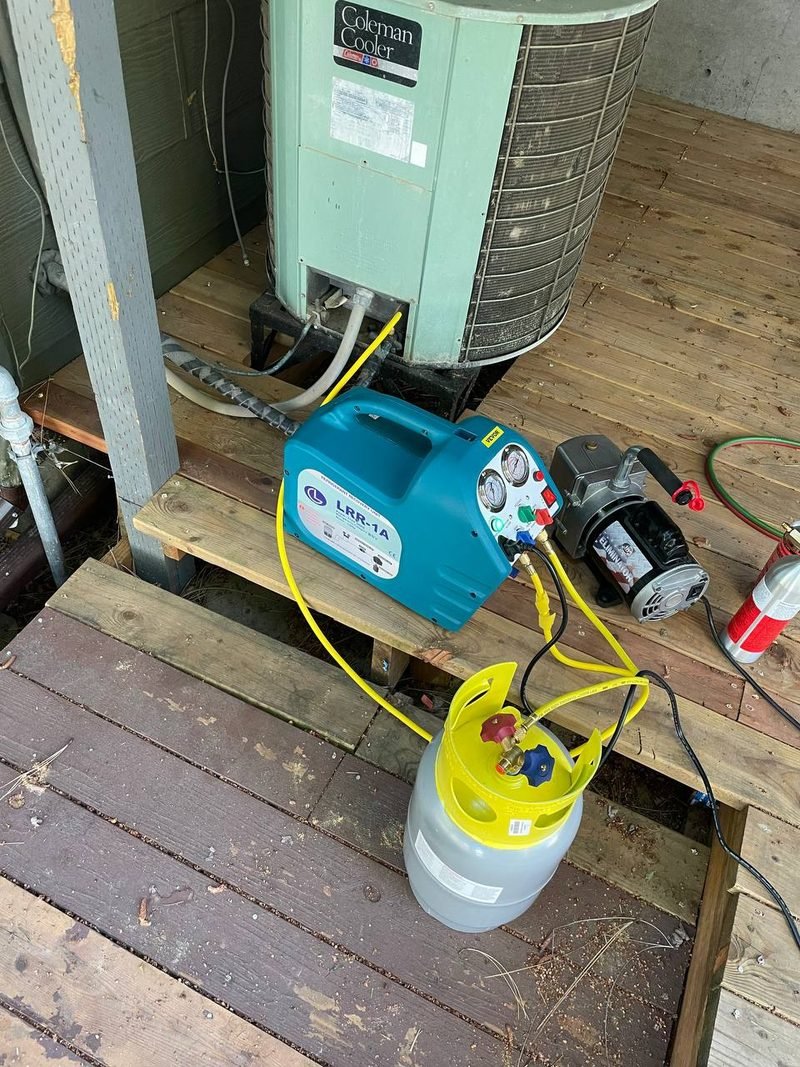
We stock parts for what the Valley actually has, including Ruud and the older Coleman and Amana units still running in 1990s ranches, alongside Carrier, Trane, Lennox and Goodman. An oversized first-generation system is the one case no part can fix: it satisfies the thermostat before it cools the rooms, and we will say so rather than sell you a pressure switch. Spokane Valley sits roughly twenty minutes out I-90 from our shop, and when a breaker trips we test the breaker and disconnect during diagnosis and tell you whether the fault is in the unit or in the home’s wiring.
Typical Valley repair prices
A contactor replacement starts at $175, and on a unit that has been short cycling for a season it is often paired with a capacitor. Leak repair with a recharge starts at $400, while a reversing valve, a bigger brazing job that means recovering the whole charge, begins at $900. Treat these as the opening figures for common Spokane-area jobs rather than a quote: your exact price is put in writing once testing ends, and the $99 sits within that figure rather than on an extra line.
| Repair | Price |
|---|---|
| Contactor | from $175 |
| Refrigerant leak repair and recharge | from $400 |
| Heat pump reversing valve | from $900 |
| AC / heat pump capacitor | from $150 |
| Outdoor fan motor | from $350 |
| Heat pump defrost board | from $250 |
| Indoor (evaporator) coil | from $1,200 |
| Compressor (out of warranty) | from $1,800 |
Starting prices in the Spokane area for 2026, part and work included. Not a quote: your exact price is in the written estimate after the $99 diagnostic.
Questions we hear
How fast can you reach a no-cool call in Spokane Valley?
A no-cool or no-heat call goes onto that day’s schedule, Monday to Saturday, and one of our vans is usually working the stretch from Argonne to Barker. Call or text in the morning for the widest choice. While you wait, close the blinds on the sunny side, and if the outdoor unit is humming without spinning, set the thermostat to off. When the day is already full, we tell you so up front.
Is short cycling a repair or a sizing problem?
It can be either. A dirty coil, a weak capacitor, a failing pressure switch or a low charge will make a correctly sized unit cycle, and each of those is a repair. A system that was oversized when it went in will cycle no matter what gets replaced. We measure pressures, amperage and run times, tell you which case you are in, and quote only what will change the pattern.
Do you still work on R-22 heat pumps in the older Valley ranches?
Yes. Our whole crew works under EPA 608 Universal certification, so R-22 equipment gets the same in-house leak repair and recharge as R-410A, R-32 and R-454B systems. On a thirty-year-old system with a leak you get the repair price in writing plus a plain view on whether that money would do more as part of a replacement, and the decision stays yours.
Why does my heat pump ice up every winter?
A thin frost that clears within an hour or so is normal. A block of ice that keeps growing means the defrost cycle is not doing its job, usually traced to the defrost board, its sensor, a sticking reversing valve or refrigerant loss. Brush snow away from the unit and switch to emergency heat if your thermostat offers it. Left alone, an iced heat pump hands the whole winter to the backup strips.
Will cleaning the cottonwood out of my condenser fix the AC?
Sometimes that is the whole repair. A matted coil drives head pressure up until the high-pressure switch shuts the unit down, and a thorough cleaning brings it back. But weeks of heat stress from a blocked coil also weaken capacitors and contactors, so we test those while the panel is open. If the coil was hiding a second fault, you see it in writing before anything else is replaced.
Call, text or book
If your Valley system is cycling, icing or blowing warm, call or text and describe the pattern; a short phone video of the outdoor unit helps. The $99 diagnostic is included in the price you approve for the repair, and you can take up to $50 off an HVAC repair booked online.
Book a visit
Tell us what is going on
We call or text back to confirm a time window, usually the same day.
- $99 diagnostic Counted inside the written repair price you approve. Say no to the repair and it is the whole bill.
- Up to $50 off An HVAC repair booked online. Appliance repairs booked online: up to $22 off. Never taken off the diagnostic.
- Up to $500 off A full-system install booked through our site-visit form, first-year tune-up included. The site visit costs nothing.
Prefer to text? Send a photo of the model tag to (509) 370-5361.